
PIONEER®LINER Hx-FPU System
Reliable trenchless rehabilitation
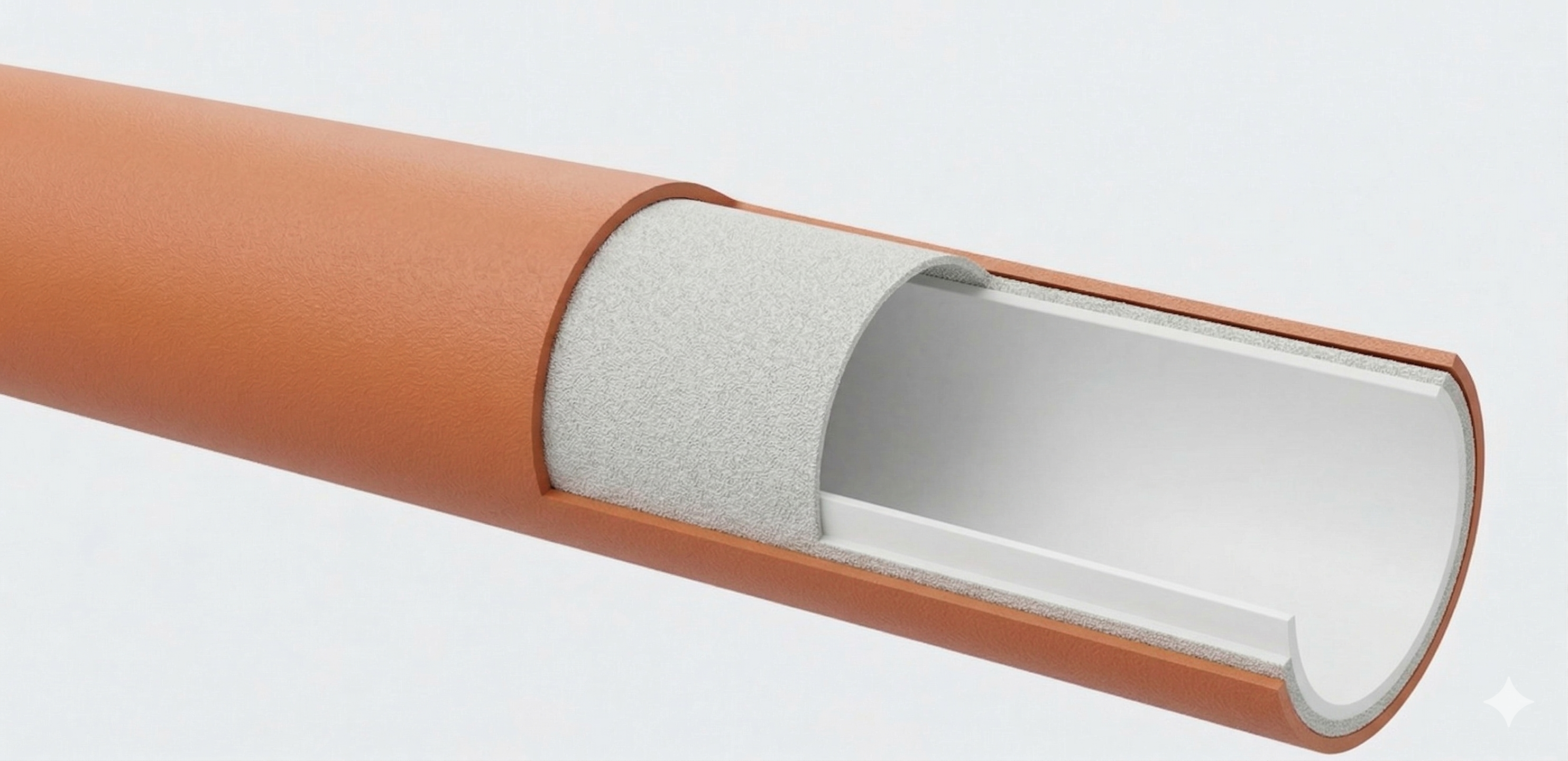
The PIONEER®LINER Hx-FPU system is a thermosetting house connection liner system specifically designed to meet the requirements of house connections. The combination of a flexible polyester fiber liner with a PU coating and a specially formulated epoxy resin system creates a rehabilitation solution that works reliably even with tight bend radii, sudden changes in nominal diameter, and difficult pipe conditions.
PIONEER®LINER HX-FPU
| Liner designation | End wall thickness | Curing | Coating | Flexibility | Elasticity |
|---|---|---|---|---|---|
| PIONEER®LINER Hx-F PU 30 S | 3,0 mm | Hot Water / Steam | Polyurethane | 90°, depending on the radius and condition of the existing pipe | 50 % |
| PIONEER®LINER Hx-F PU 30 S-G | 3,0 mm | Hot Water / Steam | Polyurethane | 90°, depending on the radius and condition of the existing pipe | 50 % |
| PIONEER®LINER Hx-F PU 40 S | 4,0 mm | Hot Water / Steam | Polyurethane | 90°, depending on the radius and condition of the existing pipe | 50 % |
| PIONEER®LINER Hx-F PU 60 S | 6,0 mm | Hot Water / Steam | Polyurethane | 90°, depending on the radius and condition of the existing pipe | 50 % |
PIONEER®LINER RX-VE UV ONE
| Resin designation | Resin type | Curing | Shelf life | Status |
|---|---|---|---|---|
| PioneerLiner Rx-EP-WW 1-60 | epoxy resin | Hot Water / Steam | 12 Monate | Optimized for home connections |
| PioneerLiner Rx-EP-WW 2-120 | epoxy resin | Hot Water / Steam | 12 months | Optimized for home connections |
Optimized for home connections
| Area of application | DN 100 to DN 300 |
| Usage | Service connections and property drainage |
| Types of liners | Hx-F PU 30 S / Hx-F PU 30 S-G / Hx-F PU 40 S / Hx-F PU 60 S |
| Elasticity | bis 50 % |
| Curvature | up to 90°, depending on the radius and condition |
| Curing | Hot water or steam |
| resin system | Epoxy resin (Rx-EP-WW 1-60 / Rx-EP-WW 2-120) |
| Installation | Inversion using compressed air; preliner recommended |
| Target thickness of laminate | at least 3 mm, up to 4 mm or 6 mm depending on the type |
Our thermosetting house liner system for the service connection area.
The PIONEER®LINER Hx-FPU system was developed for the structural rehabilitation of building service connections and property drainage systems—it is trenchless, robust, and designed for pipe diameters ranging from DN 100 to DN 300.

Wide installation tolerance
Up to 50% dimensional flexibility and suitable for bends up to 90°—depending on the radius and condition of the existing pipe. This provides flexibility during installation and reduces risks on the job site.

Designed for real-world inventory situations
Tight bends, changes in nominal diameter, and challenging pipe conditions are common in the service connection area. That is exactly what this system was designed for.

Consistent quality
Controlled hot-water or steam curing ensures uniform wall thicknesses and verifiable results. Less rework, greater reliability in execution.

A widely accepted solution
Steam-curing epoxy resin systems are widely used by local governments, designers, and private clients. This provides certainty during the bidding, awarding, and acceptance processes.

The right pot life for the construction site
Depending on the application, you have 60 or 120 minutes of working time—enough flexibility for quick installations, longer waiting periods, or more complex logistics. The right pot life for the job site

Greater process reliability
The resin amount, calibration, and heating profile are clearly defined. This improves process control and helps ensure consistent laminate quality.
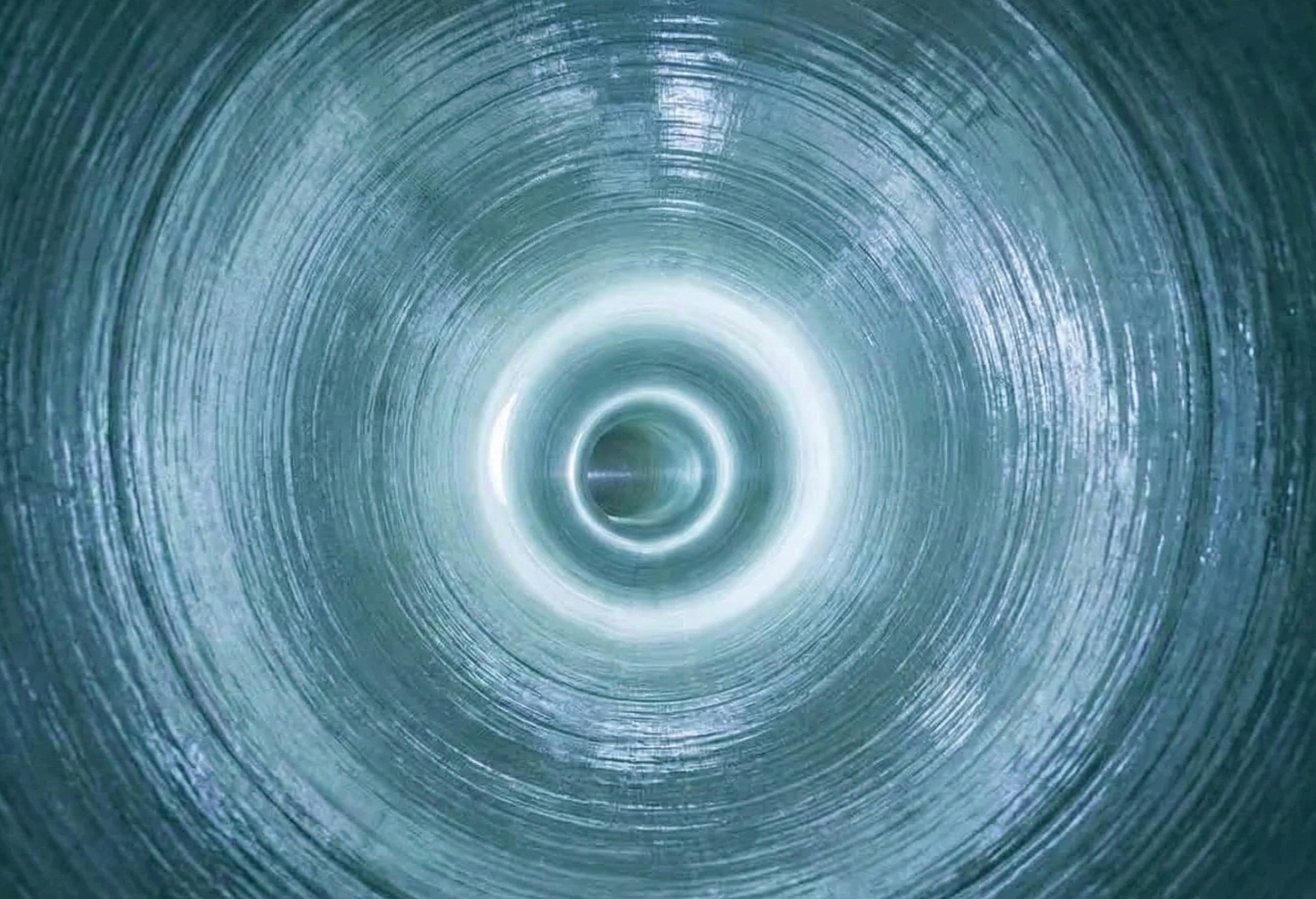
The hose makes the adjustment.
The resin provides the strength.
What makes the PIONEER®LINER Hx-FPU system so effective is not any single component, but the precisely coordinated interaction of both. The flexible polyester fiber liner with a PU coating ensures the necessary adaptability within the pipe, reliable inversion, and controlled behavior even with complex geometries. The epoxy resin system ensures excellent impregnation, uniform resin distribution, controlled thermal curing, and a resilient, durable laminate structure.
The result is not a compromise made up of individual parts, but a perfectly coordinated system with clearly defined mechanical properties.